Who Guards the Orchids? The Invisible Allies of a Home Collection
A small sachet hangs from a moth orchid leaf. It looks unremarkable, rather like a teabag that someone has attached to the plant instead of dropping it into a cup. It neither smells nor glows, and it makes no martial noises. Yet a breeding colony is at work inside. There are microscopic predators, their food and material that maintains a suitable environment. Some individuals feed, others mature, and still others leave through a prepared opening and set off across the plant. This is not a dose of powder or a product to dissolve in water. It is a tiny functioning biological system. Its inhabitants do not know that the expensive orchid came from Taiwan, that its flowers are fragrant, or that its owner waited six months for it. They know nothing of the collection’s value or its protection plan. They must find food and conditions in which they can survive. Provide both and they may do extraordinary work. Fail, and instead of an army we shall have a band of lost mercenaries who were shown neither the enemy nor the battlefield. This is where biological control of orchids begins.
More than “good bugs”
The simplest definition of biological control sounds almost idyllic: we use pests’ natural enemies to reduce their numbers. We bring in something that will find and attack the intruder, or turn it into food for its own offspring. Beneath that calm description lie very different strategies. A predator hunts and kills many prey during its lifetime. Predatory mites hunting spider mites, lacewing larvae seizing small insects, and ladybirds eating mealybugs and scale insects all work this way. A parasitoid plays an entirely different game. Usually it is a tiny wasp whose female lays an egg on, beneath the covering of, or inside a host. The larva develops at the living pest’s expense and eventually kills it. Unlike an ordinary parasite, it has no interest in its host’s long life. The host becomes a fully catered nursery, although it may have reservations about the arrangement.
There are also entomopathogenic nematodes, microscopic animals that search damp growing media for insect larvae. Once inside a host, they release symbiotic bacteria. Nematodes and bacteria work as a biological team, killing the victim and creating conditions in which a new generation of nematodes can reproduce. Not everything protecting a plant is therefore an insect. Spider mites are mites, as are their predatory relatives. Ladybirds, parasitoid wasps, lacewings and minute pirate bugs are insects; nematodes belong to a separate group altogether. “Beneficial bugs” is a friendly phrase, but biologically it resembles a drawer containing a screwdriver, a thermometer and spare batteries because all are small and may someday prove useful.
Patrol and strike force
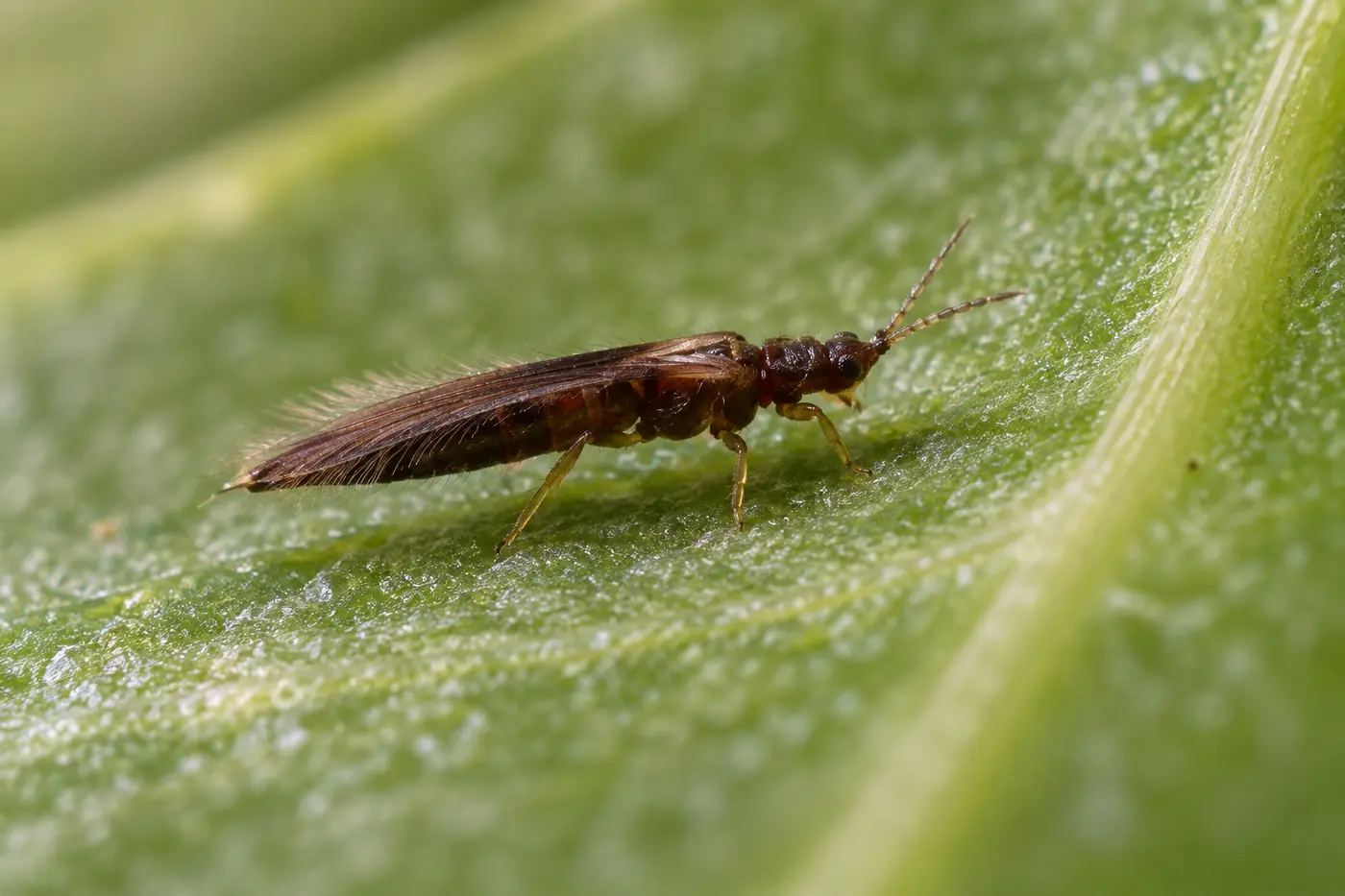
Biological-control organisms are often described as preventive or curative. The distinction is useful until we mistake it for a rigid classification of animals. Patrol and intervention primarily describe how an organism is used; the same species may serve on either side. A patrol is introduced very early: when the risk is real, monitoring has revealed the first few pests, or the chosen predator can survive for a time on pollen or alternative food. This may follow the arrival of new plants, coincide with spider-mite season, or protect a collection with a history of thrips. Prevention is not blind action. It is an attempt to stop a few unnoticed individuals becoming a population that is difficult to control.
Intervention begins once the pest is confirmed, but it should not mean waiting until the leaves resemble a silvered battlefield. The best moment to introduce many natural enemies is the first identified outbreak, when they have something to eat but their opponent has not yet occupied the collection. A serious infestation may require repeated releases or organisms attacking different life stages. Buying the largest pack and scattering it with the grandeur of a farmer sowing wheat still will not repair a mistaken diagnosis.
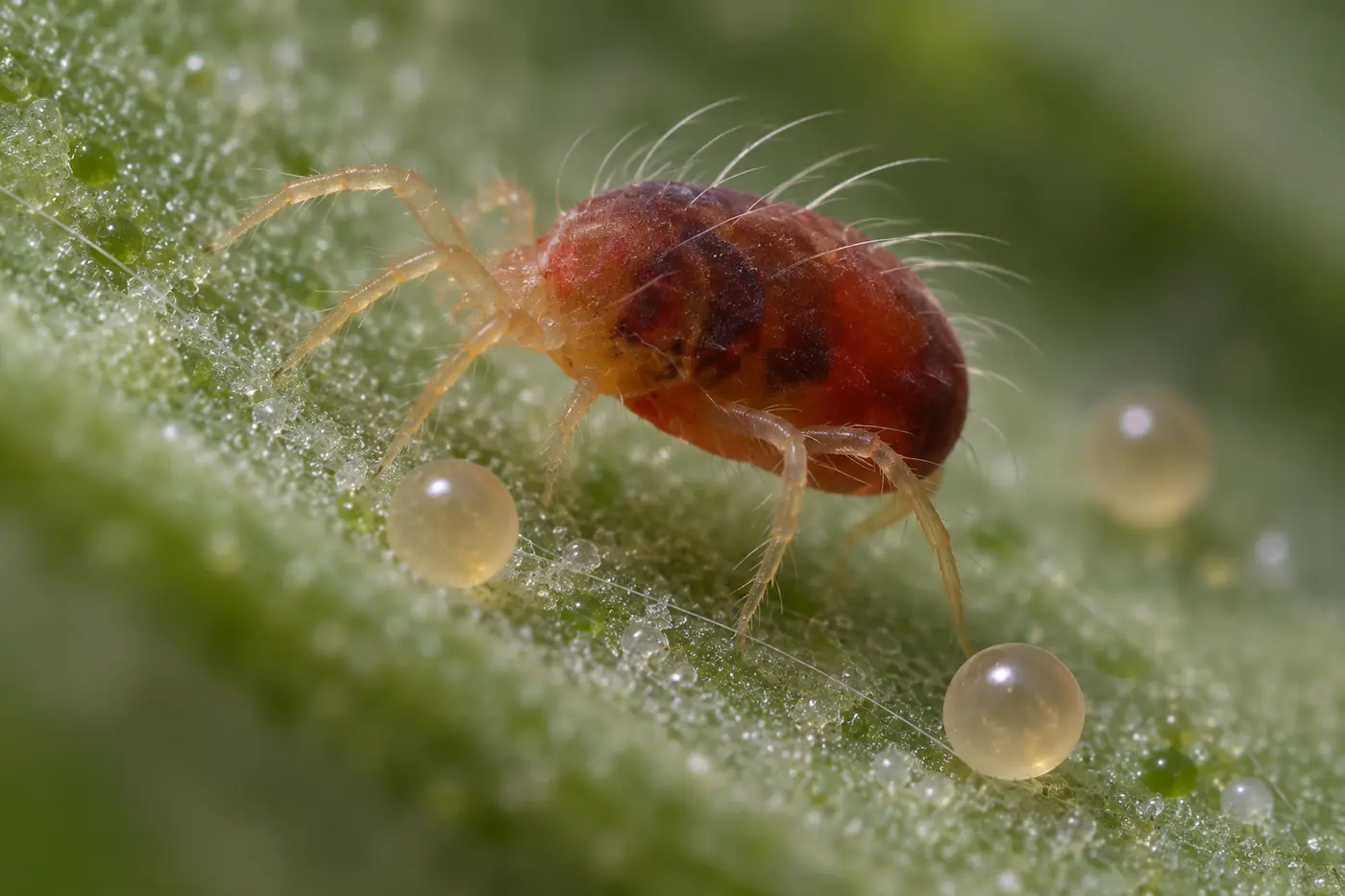
Two predatory mites used against web-forming spider mites illustrate the point. Phytoseiulus persimilis is a highly specialised and remarkably effective hunter, able to move through spider-mite webbing; once suitable prey is exhausted, however, its population loses its livelihood. Neoseiulus californicus can persist longer when spider mites are scarce and can use alternative foods. It is therefore employed more often in preventive programmes, although it too establishes most readily where at least a few prey are already present. In practice, P. persimilis is worth introducing at the first confirmed outbreak, while N. californicus may also help suppress an active infestation. The boundary between patrol and intervention depends not only on species, but on release rate, delivery method, pest pressure and growing conditions.
Life inside a sachet
Predatory-mite sachets are among the most ingenious tools of biological control. Many contain a miniature rearing system: predators, food, often harmless storage mites, and material that helps maintain the microclimate. Predators reproduce inside and successive individuals gradually emerge onto the plant. The packet should not be cut open or given extra holes unless the manufacturer instructs otherwise. It already has an exit. Tearing it apart to help its inhabitants would be rather like assisting a chick by dismantling its nest box plank by plank.
Research on sachets containing Neoseiulus cucumeris revealed another benefit: the packet may partly protect its colony from other predators. In one experiment the rove beetle Dalotia coriaria, itself used in biological control, ate more predatory mites when exposed rearing material was readily accessible. Our allies do not sign a non-aggression treaty simply because we ordered them from the same website. Sachet performance depends on predator species, product design, rearing food, temperature and humidity. Manufacturers commonly promise emergence over several weeks, but this does not guarantee identical performance in a dry home. Direct sun, low humidity and poor storage may shorten that period. A sachet does not invariably mean prevention: rearing sachets containing Phytoseiulus persimilis also exist for placement in and around spider-mite hotspots. Packaging alone does not determine strategy.
A Home Is Not a Small Greenhouse
Most beneficial organisms were developed and tested for professional production. In a greenhouse, thousands of plants stand close together, forming an almost continuous landscape of leaves. Temperature and humidity are managed, pests monitored, and predators can move from plant to plant. Such trials demonstrate what a species can do, but applying their results to a home remains a cautious extrapolation, not a promise of an identical outcome.
Thirty orchids may occupy several windowsills, a shelving unit, a grow tent and a large display tank. Two plants touch; others are separated by a corridor; still others live in a room that a predatory mite would have to reach on foot while retaining its sense of direction. Microclimates vary as well. The window cools at night, the air above a radiator is dry, and a hygrometer some distance away does not necessarily describe humidity at the leaf surface. Broad Phalaenopsis leaves do not form the continuous canopy of a cucumber, pepper or strawberry crop. Every gap between pots may be impassable to a minute predator, so separate groups can require separate release points.
A three-year Wageningen University & Research project testing natural enemies of invasive thrips directly on Phalaenopsis is particularly instructive. Some predatory mites and Orius bugs suppressed Dichromothrips corbetti very effectively, yet stable populations of several allies proved difficult to maintain. An excellent hunter does not always establish in a particular crop. It may find prey yet disperse, reproduce too slowly, or persist without controlling the pest as well as expected. Appetite alone never determines success; the entire growing system does.
Identify the Enemy before Calling in the Army
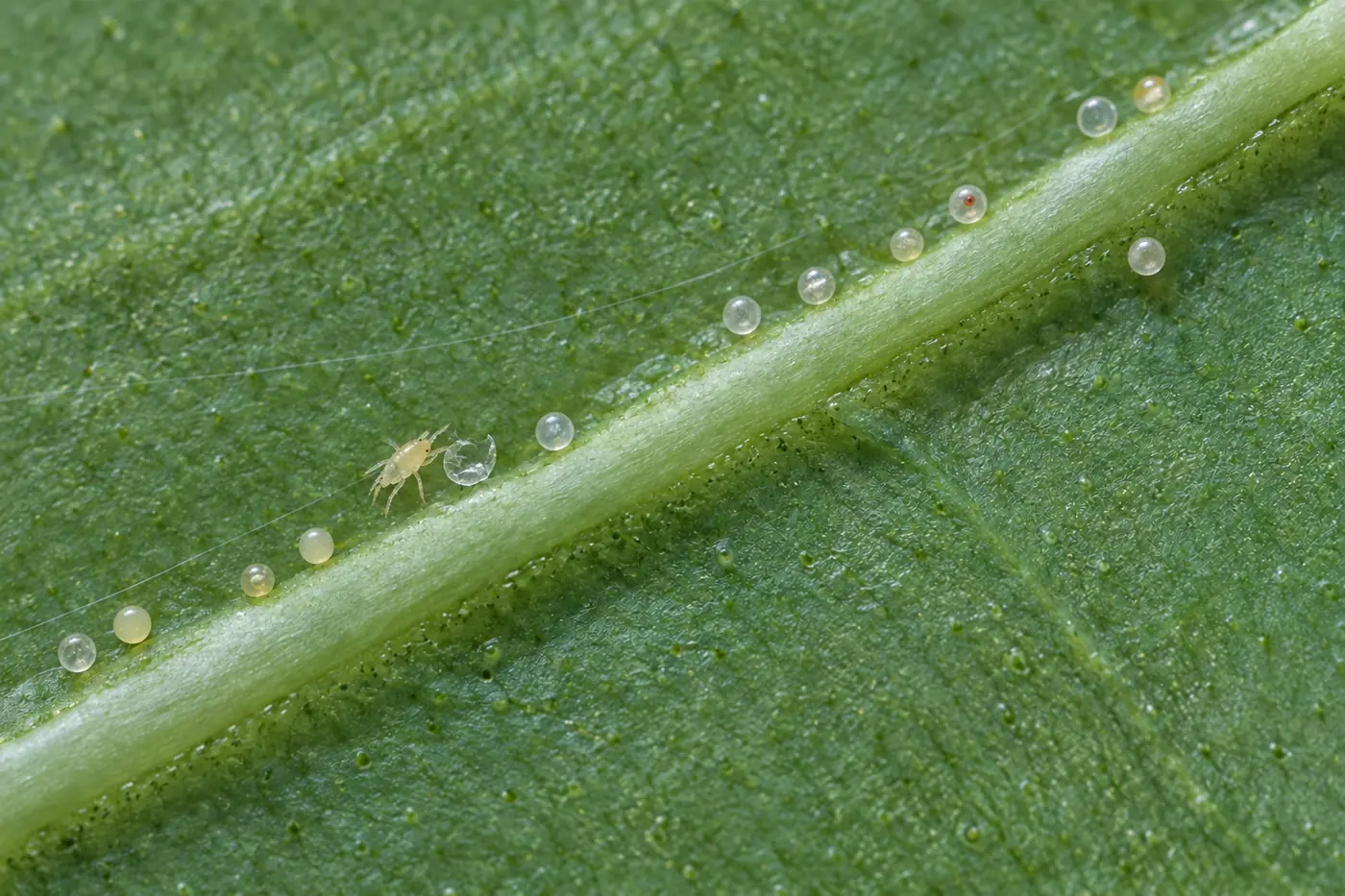
Feeding damage does not always identify its author. A silvered leaf may suggest spider mites, but damage alone neither proves Tetranychus urticae nor tells us whether the pest is still present. Tenuipalpus pacificus, one of the flat mites known as false spider mites, has been recorded on Phalaenopsis hybrids imported into Poland. These mites make no typical web and may leave silvered, later rusty-brown damage. A predator specialising in Tetranychus will not automatically control every creature producing similar marks. There is currently no strong basis for presenting common commercial predatory mites as a reliable domestic solution to T. pacificus.
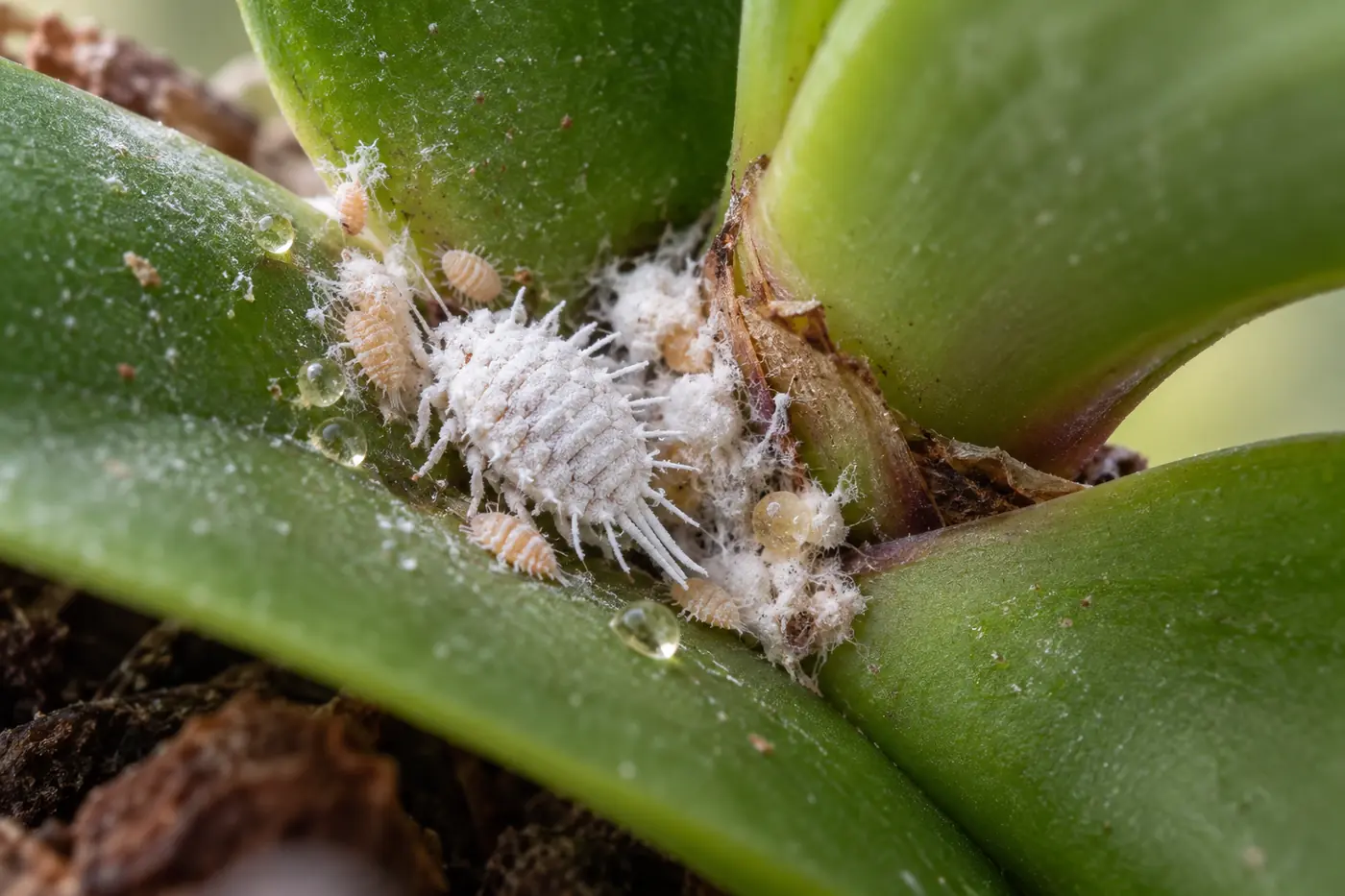
The same applies to mealybugs, armoured scales and soft scales. To us they may all resemble white fluff or a suspicious brown bump. To a parasitoid, the difference between species is the difference between a suitable host and an animal it cannot use.
A predator may eat a pest in a laboratory arena yet fail to protect plants in a greenhouse. Being able to consume a dinner served on a small plate does not prove an ability to locate every dinner scattered among thirty pots. Reversing the order of diagnosis and treatment produces an operation that is admirably ecological and spectacularly ineffective.
Does Beneficial Mean Safe?
At home, biological control can reduce spraying around people and animals. It leaves no conventional pesticide residues and uses organisms selected for particular prey. A natural enemy is nevertheless alive, and the carrier in a sachet or bottle may produce dust. Allergic reactions have been recorded among workers exposed for long periods to enormous numbers of biological-control mites. This does not place a hobbyist hanging several sachets at the same risk as a greenhouse worker. It is still sensible not to inhale carrier dust, not to scatter it unnecessarily, and to follow instructions, particularly if asthma or allergies are present.
A product that kills pest mites may also kill predatory ones. This includes not only conventional pesticides but some oils and contact soaps. “Natural” and “ecological” do not automatically mean “safe for predatory mites”. In an orchid-pest experiment, horticultural oil mixed with the adjuvant Silwet caused high mortality in pests and in two predatory-mite species. Compatibility and waiting time must be checked for the actual product, concentration, method and date of application. Spraying the collection and releasing predators the next day may end the programme before it begins.
How Do We Know It Is Working?
Old damage will not disappear. Silvering remains silver, scars do not regain green tissue, and an empty dead scale may remain attached. Success cannot be judged from an old leaf alone.
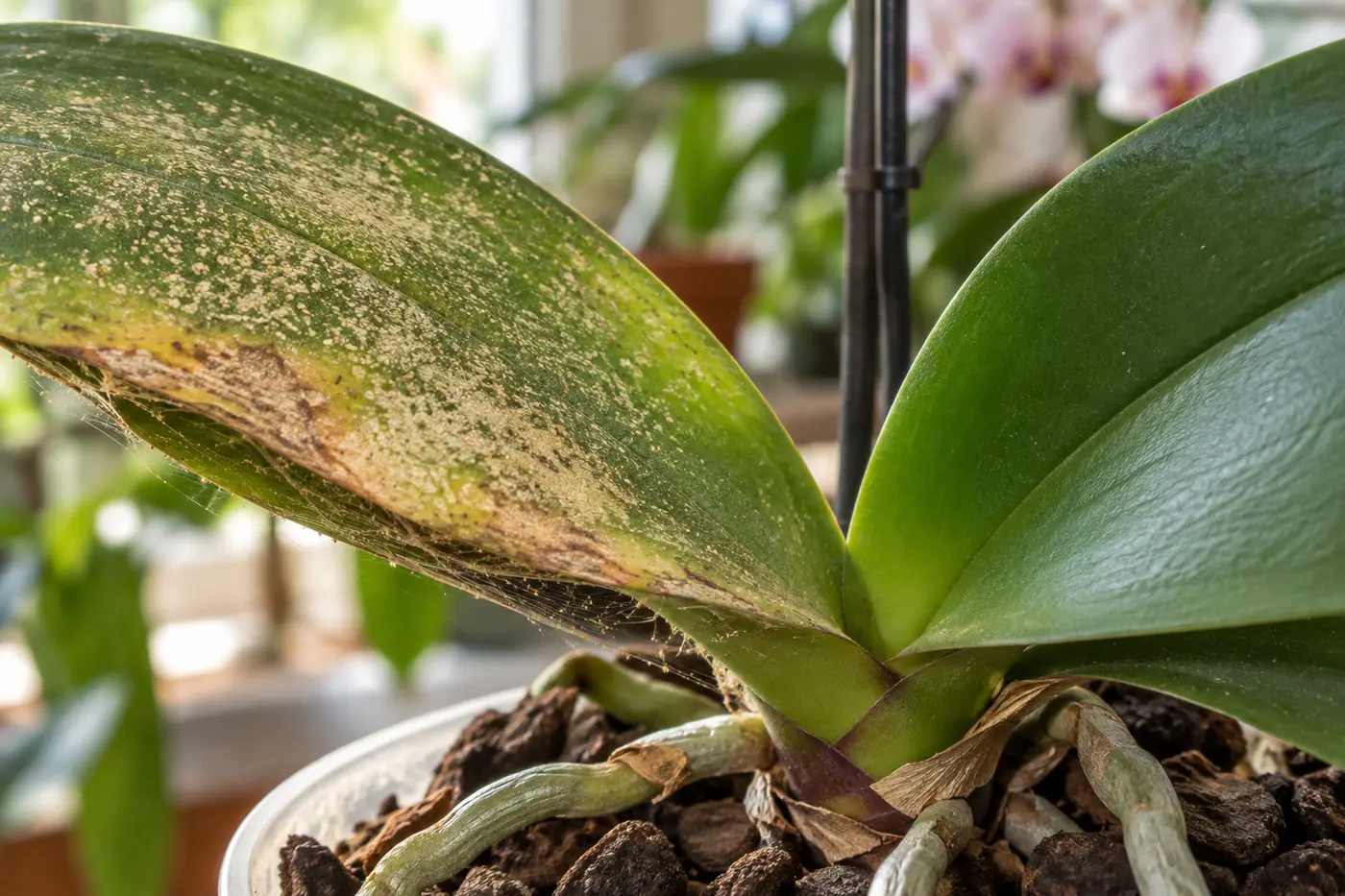
Watch for living pests, new hotspots and fresh damage on developing leaves. At least weekly, inspect comparable places: leaf undersides and axils, veins, buds and new growth. Very small organisms require a hand lens, an inexpensive digital microscope, or a white-paper test in which a leaf is gently tapped over paper. Sticky traps detect flying thrips, whiteflies and fungus gnats, but cannot reliably measure mites living on the plant.
We may not see the allies themselves, but may find evidence of their work: an exit hole in a scale covering, an aphid turned into a mummy, fewer young thrips, or new leaves without fresh damage. Success need not mean instant sterility. Biological control usually aims to reduce a pest population below damaging levels and keep it there. If living pests and new lesions continue to increase, the programme needs changing. Too few predators, unsuitable conditions, pesticide residues, or simply the wrong hunter may be responsible.
The Collection as a Map
The first tool in domestic biological control need not be a sachet. It may be a sheet of paper. Divide the collection into groups by location; mark new purchases, symptomatic specimens and pots that touched them; record earlier treatments and observation dates. A vague “I think I have something” becomes a map on which a release can be planned. A pest confined to one windowsill does not justify scattering a specialist predator in another room. If it occupies several isolated plant groups, each becomes an island requiring its own plan. Flying organisms cross distance more easily, although an ally may then decide that the window is the most interesting part of the room.
Thirty orchids form a collection valuable enough to make a professional product economically sensible, but still small, scattered and unlike the greenhouse for which doses per square metre were designed. Sachet numbers or release rates must follow the specific product, pest identity and abundance, and plant arrangement. A conversation with the supplier matters more here than the most confident social-media comment. Biological control depends first on correct identification and only then on choosing the natural enemy.
Who Really Guards the Orchids?
No predatory mite, nematode or parasitoid can protect a collection alone. Its true guardian is the owner who notices a pest early and does not dispatch the first predator found in a shop. Only then can a mite barely larger than the full stop ending this sentence be entrusted with an orchid worth a considerable sum. The little sachet still hangs from the leaf, inconspicuous as forgotten tea. Its residents do not obey our orders. They follow hunger, temperature, humidity and the scent of prey. The art lies in making their needs coincide, briefly, with those of the collection.
In the Next Part
Before choosing a predator and hanging the first sachet, we must examine the enemy at very close range. We shall descend to the leaf surface, where spider mites puncture individual cells, flat mites leave similar traces without spinning a single thread, and released hunters search for the correct prey. We shall compare Phytoseiulus persimilis with Neoseiulus californicus, and see why a silvered leaf is not yet a diagnosis. Part Two: “Hunters on the Web: Two Predatory Mites and the Mystery of Silvered Leaves”.
Series: Living Defences for an Orchid Collection
- Who Guards the Orchids? — you are here
- Hunters on the Web — next part
- An Army against Thrips, Mealybugs and Scale Insects — in preparation
- A Home Biological-Control Plan — in preparation
Text: Marzenna Kielan, phalaenopsis.pl
Expand sources and bibliographyCollapse sources and bibliography
- McMurtry, J.A., de Moraes, G.J., Sourassou, N.F. (2013). Revision of the lifestyles of phytoseiid mites (Acari: Phytoseiidae) and implications for biological control strategies. Systematic & Applied Acarology, 18(4), 297–320. DOI: 10.11158/saa.18.4.1.
- Pochubay, E. et al. (2015). Slow-Release Sachets of Neoseiulus cucumeris Predatory Mites Reduce Intraguild Predation by Dalotia coriaria in Greenhouse Biological Control Systems. Insects, 6(2), 489–507. DOI: 10.3390/insects6020489.
- Solano-Rojas, Y. et al. (2022). Effect of Relative Humidity on the Population Dynamics of the Predator Amblyseius swirskii and Its Prey Carpoglyphus lactis in the Context of Slow-Release Sachets for Use in Biological Control in Greenhouses. Plants, 11(19), 2493. DOI.
- Le Hesran, S. et al. (2024). Weerbare teeltsystemen tegen invasieve tripsplagen in de glastuinbouw. Wageningen Plant Research, WPR-1284. DOI: 10.18174/648867.
- Messelink, G.J., Leman, A. (2020). Are low humidity levels a limiting factor for spider mite control by phytoseiid predators under fluctuating climatic conditions? Wageningen University & Research. The study used greenhouse cucumber and Tetranychus urticae, not Phalaenopsis.
- University of Florida IFAS Extension. Phalaenopsis Mite, Tenuipalpus pacificus. Publication IN683.
- Ray, H.A. et al. (2014). Effects of Reduced-Risk Insecticides on Three Orchid Pests and Two Predacious Natural Enemies. Florida Entomologist, 97(3).
- Cornell University IPM. Neoseiulus californicus — Predatory Mite.
- Cornell University IPM. Phytoseiulus persimilis — Predatory Mite.
- Groenewoud, G.C. et al. (2002). Prevalence of sensitization to the predatory mite Amblyseius cucumeris as a new occupational allergen in horticulture.